
|
|



George
Orwell (the pen-name of Eric Arthur Blair) was born in India in 1903, the son of
an English administrator. After being educated at Eton (“the most costly and
snobbish of the English Public Schools”, so he claimed), Orwell served with
the Indian Imperial Police in Burma. He resigned in 1927 and became a writer,
initially unsuccessful. He spent several years living in poverty, often on the
streets (for an account of these times, his book Down and Out in Paris and
London is well worth reading). During this period, his experiences with the
poorer elements of society, particularly the miners in Northern England, caused
him to develop pro-Socialist attitudes. He married in 1936 and six months later
traveled to Spain in order to fight the Fascists during the Civil War. He was
shot through the throat by a sniper, although he survived.
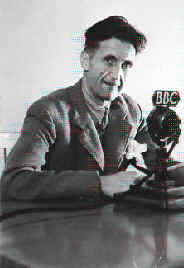 Whilst in Spain, Orwell became
involved with a Trotskyist militia group. When a Communist faction gained some
control of the Spanish government in 1937, Orwell’s group were one of many
hunted down. A number of his colleagues were shot or ‘disappeared’, although
he himself escaped.
Whilst in Spain, Orwell became
involved with a Trotskyist militia group. When a Communist faction gained some
control of the Spanish government in 1937, Orwell’s group were one of many
hunted down. A number of his colleagues were shot or ‘disappeared’, although
he himself escaped.
Orwell
recognized the parallels between the Spanish man-hunts and similar (albeit
greater) purges taking place in the Soviet Union. He realized that a primary
issue was the use of propaganda by totalitarian states to influence the minds of
the populace against certain groups. He was particularly disturbed that, upon
returning to the United Kingdom, press accounts of the purges were often wildly
inaccurate, following the Soviet accounts of events.
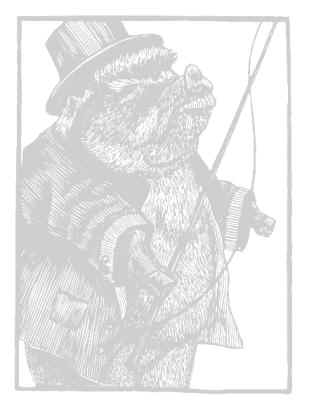
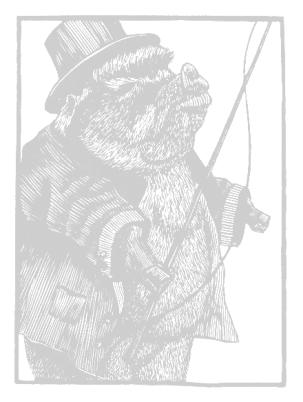 Although
Orwell had never visited Russia, and indeed would not condemn Stalin for his
methods, he felt that it was vital that people in Western Europe saw the truth
about the Soviet regime. He was struck by the irony that Soviet society was
moving further away from Socialism and that in the relative comfort of English
culture there was a total lack of understanding regarding the nature of
Stalinist Russia. Animal Farm was written, at least partly, as a way of
destroying the Soviet myth and reviving the Socialist movement in the West,
which had been severely damaged.
Although
Orwell had never visited Russia, and indeed would not condemn Stalin for his
methods, he felt that it was vital that people in Western Europe saw the truth
about the Soviet regime. He was struck by the irony that Soviet society was
moving further away from Socialism and that in the relative comfort of English
culture there was a total lack of understanding regarding the nature of
Stalinist Russia. Animal Farm was written, at least partly, as a way of
destroying the Soviet myth and reviving the Socialist movement in the West,
which had been severely damaged.
Orwell
stated, “if the work does not speak for itself, it is a failure”. However,
he was clear that although many elements from the plot were taken directly from
the history of the Russian Revolution, some of the chronology was changed for
dramatic effect. More importantly, Orwell was concerned that the conclusion of
the book had been misread by many critics. His opinion was that although there
was an improvement in relationship between the pigs and men (reflecting a
similar state of affairs between East and West at the time), this could not
last. As events showed, he was not wrong.
Paraphrased from Orwell’s introduction
to the Ukrainian edition of Animal Farm, March 1947
Go to Cast/ Crew (not yet active)
